
For most operations, uptime starts with one assumption: “If the equipment is working, we’re fine.” And for years, that was largely true.
But today’s environments are different. Devices are more connected, workforces are more mobile, and operations depend on more than just functioning hardware. As a result, downtime doesn’t always come from equipment failure anymore.
In fact, many of the most common disruptions happen while devices are technically still “working.”
Downtime has Changed
Rising hardware costs have forced many organizations to rethink where they invest. Service programs can sometimes feel like an added expense, something to defer or minimize.
But here’s the reality: Most downtime today isn’t caused by broken equipment.
It’s caused by everything around it.
- A device is on, but a worker can't log in
- A scanner works, but the wrong application is loaded
- A printer is running, but it's not updated or configured correctly
- Devices are shared, but credentials are misused or locked out
- IT teams lack visibility into what's happening in real time
The result is the same: Production slows. Work stops. Teams wait.
Event though nothing is technically "broken."
Why this Matters Now
Manufacturing, warehousing, and field operations are increasingly dependent on shared devices and connected systems. As complexity grows, so does the number of ways downtime can occur.
Focusing only on equipment repair leaves gaps.
True uptime comes from addressing all three layers, keeping devices working, ready, secure and accessible.
Service is No Longer Just About Repair
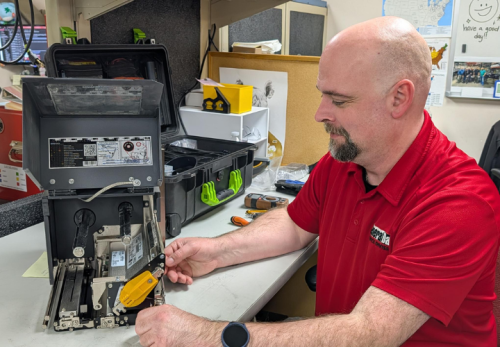
General Data’s Service Division is built to support uptime at every level.
What began as expert equipment service has evolved to include:
- Preventive maintenance and repair
- Device management for visibility and control
- Identity and access solutions to secure and streamline usage
This unified approach helps reduce not just hardware failures, but the hidden disruptions that impact productivity every day.
Rethinking the Cost of Downtime
It’s easy to look at service as an added expense, especially as hardware costs rise.
But when downtime is caused by misconfiguration, lack of visibility, or access issues, the cost isn’t just repair- it’s lost productivity, delayed shipments, and operational inefficiency.
Service, when done right, helps prevent all of it.
The Bottom Line
If uptime matters to your operation, it’s no longer just about fixing devices when they break.
It’s about making sure they are always working, ready and accessible.
Because in today's environment, that's what keeps operations moving.
Learn how General Data Service helps improve uptime across every layer of your operations.